
Tulsi Vivah 2026: Date, Muhurat and Step-by-Step Vidhi
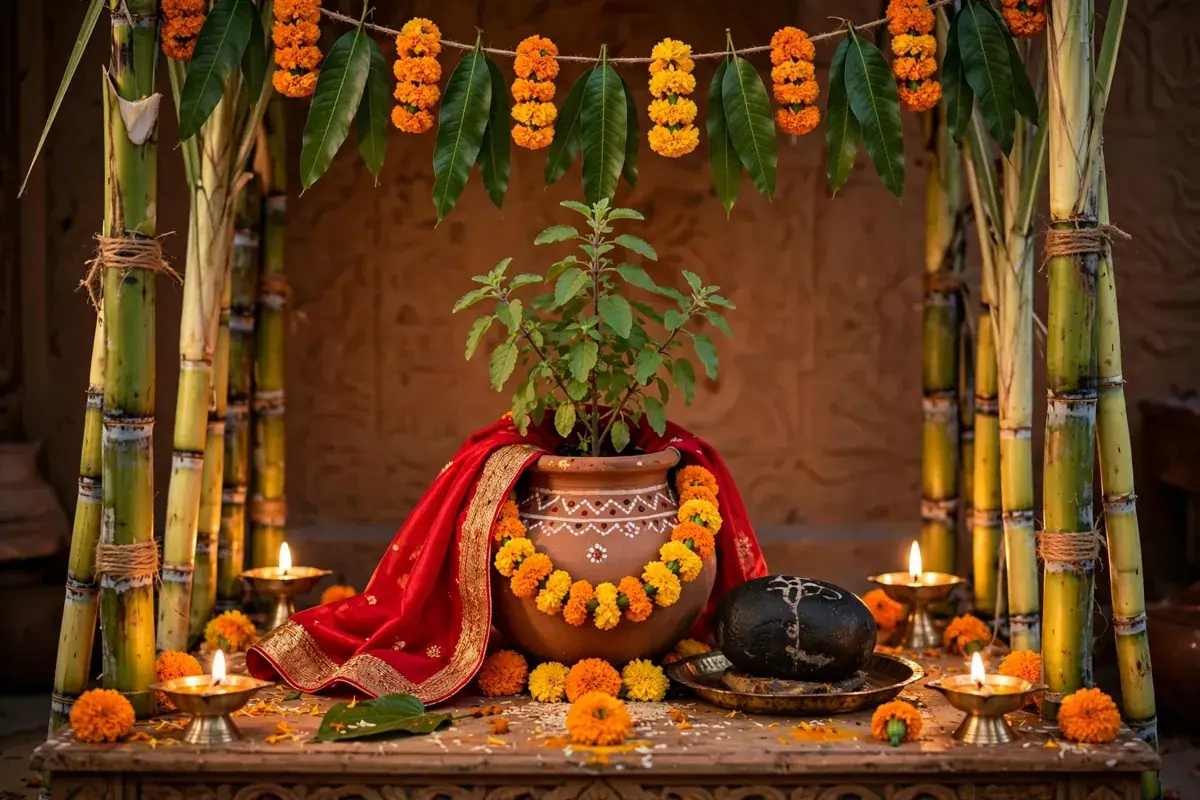
Tulsi Vivah in 2026 is on Saturday, 21 November 2026, on Kartik Shukla Dwadashi. The wedding of the tulsi plant with Shaligram (Vishnu) is done in the evening, around sunset, and the full puja can be done at home in about 30 to 45 minutes with the samagri most homes already have. The Dwadashi tithi runs from 6:31 AM on 21 November to 4:56 AM on 22 November (New Delhi timings, Drik Panchang). If you keep the Dev Uthani Ekadashi fast, note one thing before anything else: the fast day differs by tradition — Friday 20 November for Smarta households, Saturday 21 November for Vaishnava households — but Tulsi Vivah itself falls on Dwadashi, 21 November, for everyone.
Date and tithi, in one place
| Item | Detail (2026) |
|---|---|
| Tulsi Vivah | Saturday, 21 November 2026 |
| Tithi | Kartik Shukla Dwadashi |
| Dwadashi tithi runs | 21 Nov, 6:31 AM → 22 Nov, 4:56 AM (New Delhi) |
| Dev Uthani Ekadashi (Smarta) | Friday, 20 November 2026 |
| Dev Uthani Ekadashi (Vaishnava) | Saturday, 21 November 2026 |
| Puja time of day | Evening, around sunset (Godhuli / Pradosh Kaal) |
Sources: Drik Panchang (New Delhi), cross-checked against independent Drik-based calendars. Timings shift a little by city because they follow local sunrise and sunset — Kolkata readers should read the same Dwadashi tithi in their local panchang and take the evening window around their own sunset.
Which date applies to you
Most of the confusion around Tulsi Vivah is really Ekadashi confusion. This table settles it:
| Your household follows | Your Ekadashi fast | Your Tulsi Vivah |
|---|---|---|
| Smarta tradition | Friday, 20 November | Saturday, 21 November (evening) |
| Vaishnava tradition | Saturday, 21 November | Saturday, 21 November (evening) |
| No Ekadashi fast, only the wedding puja | — | Saturday, 21 November (evening) |
A few social posts print 20 or 22 November for Tulsi Vivah. Those dates come from the wider festive window (the Tulsi Vivah season is traditionally counted from Dev Uthani Ekadashi to Kartik Purnima), not from the Dwadashi tithi itself. The wedding day, by the panchang, is 21 November.
Why this day is kept
In the katha tradition, Tulsi (Vrinda) is married to Shaligram, the form of Vishnu, on Kartik Shukla Dwadashi. Dev Uthani Ekadashi, the day just before, marks Vishnu waking from his four-month rest (Chaturmas), so Tulsi Vivah is kept as the first wedding of the season — from this day, the marriage season traditionally opens again. Families keep it for the tulsi plant they worship all year: the plant is dressed as a bride, and the home treats the evening like a small, real wedding.
Samagri checklist
| Item | Needed for | Small-home note |
|---|---|---|
| Tulsi plant in its pot | The bride | Your regular courtyard/balcony plant is fine |
| Red chunri or dupatta | Dressing the tulsi | One clean dupatta is enough |
| Shaligram, or a Vishnu idol/photo | The groom side | No Shaligram? See the note below |
| 4 sugarcane or banana stems | The small mandap | Optional — skip if space is tight |
| Mango leaves + string | Toran over the mandap | A single strand above the pot works |
| Marigold flowers + 1 garland | Decoration, varmala | Loose flowers can replace the garland |
| Haldi, kumkum, sindoor, chandan | Tilak and dressing | Small bowls, a pinch each |
| Diya + ghee or oil, incense, camphor | Aarti | One diya is enough |
| Panchamrit (milk, curd, honey, sugar, ghee) | Offering | Or plain milk |
| Fruits + sweets | Bhog / prasad | Any seasonal fruit |
| Akshat (raw rice), tulsi leaves | Offering during puja | Pick leaves a day earlier — see Do / Avoid |
| Red thread (kalava) | The symbolic knot | Any clean red thread |
| Gangajal or clean water in a lota | Sankalp, sprinkling | Plain clean water if Gangajal is not at home |
The full vidhi, step by step
Before the evening: bathe, wear clean clothes, and clean the tulsi area. If you draw alpana/rangoli, a small one around the pot is enough. Pluck any tulsi leaves you will offer today itself or keep them ready from a day earlier (tradition avoids plucking on Ekadashi — see below).
1. Set the mandap. Tie the four sugarcane or banana stems at the corners around the tulsi pot and hang the mango-leaf toran across the top. In a flat with no space for stems, place the pot on a clean stool or table and hang the toran on the wall or railing above it — the mandap is a frame of honour, and a small frame is still a frame. 2. Dress the bride. Drape the red chunri over the pot and plant so it falls like a sari. Put a haldi-kumkum tilak on the pot, and hang the garland on the tulsi. 3. Seat the groom side. Place the Shaligram (or Vishnu idol/photo) on a small plate or clean cloth to the right of the tulsi, with its own tilak and a few flowers. 4. Light the diya and take sankalp. Light the lamp and incense. With water in your right palm, state your name and that you are performing Tulsi Vivah at home with devotion, then let the water fall on the ground or plate. 5. Offer the basics. Offer chandan, akshat, flowers and tulsi leaves to the Shaligram/Vishnu side first, then to Tulsi, with a spoon of panchamrit or milk for each. 6. Read or listen to the Tulsi Vivah katha. A short version takes about five minutes. The heart of the story: Vrinda's devotion, her becoming Tulsi, and Vishnu's promise that she would be married to him as Shaligram and worshipped in every home. Read it in any language you understand — understanding it matters more than the language. 7. The wedding moment. Tie the red thread loosely between the tulsi pot and the Shaligram plate — this knot is the symbolic vivah. Place a garland on the tulsi and one beside the Shaligram (the varmala exchange), sprinkle akshat over both, and offer the sweets and fruits as bhog. 8. Aarti. Do aarti of Tulsi and Vishnu together with the camphor or diya, moving the lamp in a circle before both. If your family walks around the tulsi (parikrama) after aarti, do it as your household customarily does. 9. Prasad. Share the offered fruits and sweets with everyone present. The chunri and mandap are usually left in place overnight and removed respectfully the next day; the tulsi, of course, stays and is watered as always.
The whole vidhi takes 30 to 45 minutes. If the evening is short, steps 1–3 in simple form, the sankalp, the knot, the katha and the aarti (steps 4, 6, 7, 8) still make a complete home puja of about 15 to 20 minutes.
If you have no Shaligram
Many families do not keep a Shaligram at home, and the puja is still done. The common practice is to seat a Vishnu idol or a framed Vishnu photo on the groom side; some families use a kalash or a supari in a plate as the symbolic seat. Follow what your family or your family priest customarily accepts — the tulsi, the knot and the katha are the centre of this puja, not the rarity of the stone.
Upay Pitara — Free Sample
Three full remedies from the Upay Pitara library — Shani Shanti, Nazar Suraksha and Karz Mukti — with the complete step-by-step method. Free, in exchange for your name and email.
Get the Free SampleWhat if you miss the evening muhurat?
The Dwadashi tithi itself runs until 4:56 AM on 22 November, so the puja done later on the night of the 21st is still within Dwadashi. If the 21st passes completely, many traditions count the Tulsi Vivah season from Dev Uthani Ekadashi to Kartik Purnima, and home pujas are done on an evening inside that window — if you follow that practice, pick the nearest evening and do the same vidhi. What we would not suggest is inventing a new date weeks later; if the season has passed, keep a simple tulsi aarti on a Thursday and do the full vivah next Kartik.
Do / Avoid
Do
- Keep the tulsi area clean and the plant watered in the days before.
- Dress the plant and set the mandap before sunset, so the wedding moment falls in the evening light.
- Let children do one real part — holding the aarti plate or offering flowers. This puja is how the tradition is handed over.
Avoid
- Plucking tulsi leaves on Ekadashi day — tradition treats the plant as fasting on Ekadashi; pick leaves earlier if your offering needs them.
- Non-vegetarian food and alcohol in the home on the day, for those observing the festival.
- Turning it into a spending test. Sugarcane, a chunri and marigolds are the whole scale of this wedding — a balcony plant and one diya are enough.
Related reading
Sade Sati runs through this whole season too — see Sade Sati in 2026: Which Rashis Are Running It, and What Each Phase Means for your phase and simple traditional practices.
After the wedding, many homes also hang a nimbu mirchi or a nazar battu at the entrance for protection — see Buri Nazar: 7 Signs at Home and the Simple Ways to Remove It for the signs to watch for at home and the simple traditional remedies.
Frequently asked questions
Tulsi Vivah 2026 kab hai?
Saturday, 21 November 2026, on Kartik Shukla Dwadashi. The puja is done in the evening, around sunset. The Dwadashi tithi runs from 6:31 AM on 21 November to 4:56 AM on 22 November (New Delhi, Drik Panchang).
Tulsi Vivah ghar par kaise kare?
Dress the tulsi pot in a red chunri, seat a Shaligram or Vishnu idol/photo beside it under a small sugarcane mandap, take sankalp, offer flowers and panchamrit, read the short katha, tie a red thread between the two as the symbolic wedding knot, exchange garlands, and finish with aarti and prasad. The full step-by-step vidhi is in this article — 30 to 45 minutes, or about 15 to 20 minutes in the short form.
Shaligram na ho to Tulsi Vivah kaise kare?
Use a Vishnu idol or a framed Vishnu photo on the groom side — this is the common practice in homes that do not keep a Shaligram. Some families use a kalash or a supari in a plate as the symbolic seat. The rest of the vidhi stays the same.
Ekadashi ka vrat 20 November ko hai ya 21 ko?
Both, by tradition: Smarta households fast on Friday 20 November 2026, Vaishnava households on Saturday 21 November. This difference is about the fast only — Tulsi Vivah is on Dwadashi, Saturday 21 November, for everyone.
Kolkata mein Tulsi Vivah ka samay kya rahega?
The tithi is the same Kartik Shukla Dwadashi. Timings follow your local sunrise and sunset, so Kolkata readers should take the evening window around their own local sunset and confirm the tithi timings in their local (Bengali) panchang — the exact muhurat minutes differ from New Delhi's.
Kya Tulsi Vivah ke baad shadi ka season shuru hota hai?
In the tradition, yes. Dev Uthani Ekadashi ends Chaturmas, and Tulsi Vivah on the next day is kept as the first wedding of the season — marriage muhurats traditionally open from this period.
Read also
December 2026 Hindu Calendar: Festival Dates & Muhurats
Kartik Purnima 2026: Dev Deepawali, Guru Nanak Jayanti
Vivah Yog — Vivah Upay Ebook
11 traditional remedies connected with marriage, with day, time, materials and full method, plus a simple 15-day plan. In Hindi, easy to follow step by step.
₹149
See the BookGet new guides and festival dates on email
One short email when a new article or festival guide is published. No spam, and you can unsubscribe any time.